


Índice
When we talk about how to play under pressure in golf, few situations create as much tension as the 18th hole. It is the moment when a round, a competition, or even the final feeling a player leaves the course with is decided.
From our experience at Golf Alcanada, we see how many players completely change the way they play on the final hole. The problem is usually not technical, but mental: tension increases, doubts appear, and the player stops executing naturally.
For this reason, learning how to manage pressure on decisive holes is essential to maintain performance and make better decisions in highly demanding situations.
Why the 18th hole creates so much pressure
The final hole concentrates several psychological factors that directly affect performance:
- Feeling of closure or final result.
- Increased focus on the scorecard.
- Accumulated physical fatigue.
- Fear of making decisive mistakes.
- Overthinking before the shot.
All of this changes the player’s usual rhythm and alters processes that are normally automatic.
On technical and demanding courses like the ones we work with at Golf Alcanada, this pressure increases even more because every decision has clear consequences on the final result.
What happens physically under pressure
Pressure does not only affect the mind. The body also reacts:
- Muscle tension increases.
- Heart rate accelerates.
- Swing fluidity decreases.
- Fine coordination is reduced.
That is why many players feel like they “lose their swing” on the final holes. In reality, the movement changes because the body enters a state of higher tension.
Learning to recognize this reaction helps manage it better during the round.
How to control pressure on the 18th hole

Maintain your normal routine
One of the most common mistakes is completely changing the shot preparation.
Under pressure:
- Many players take too long to execute.
- Others rush because of nervousness.
- Some start changing technical thoughts.
The routine should remain stable:
- Same preparation time.
- Same visualization process.
- Same execution rhythm.
Mental stability starts with maintaining consistent habits.
The importance of the logical shot
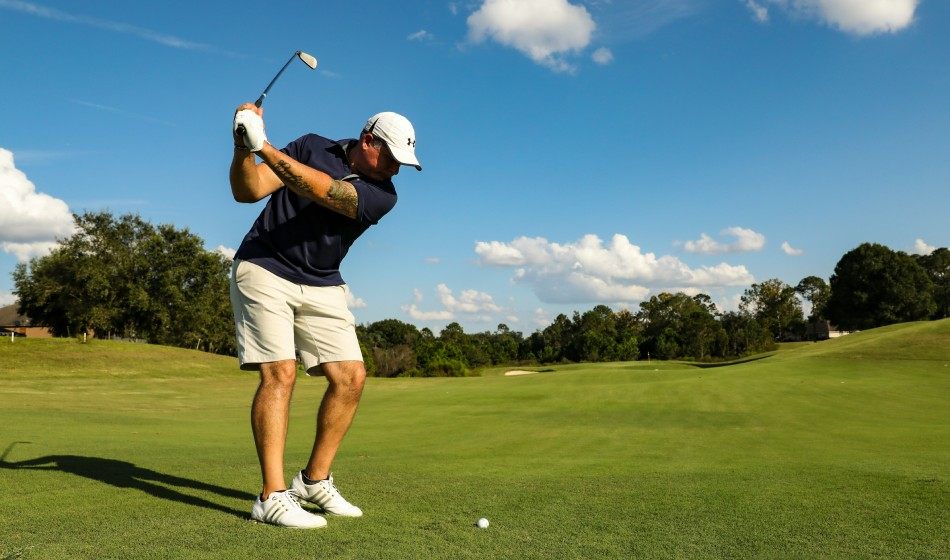
On the 18th hole, players often feel the need to “save” the round with an extraordinary shot.
However, under pressure:
- The error percentage increases.
- Decision-making becomes less objective.
- Risks become magnified.
That is why we recommend prioritizing:
- High-percentage shots.
- Simple strategies.
- Control before aggression.
Control your breathing before the shot
Breathing directly influences the body’s tension level.
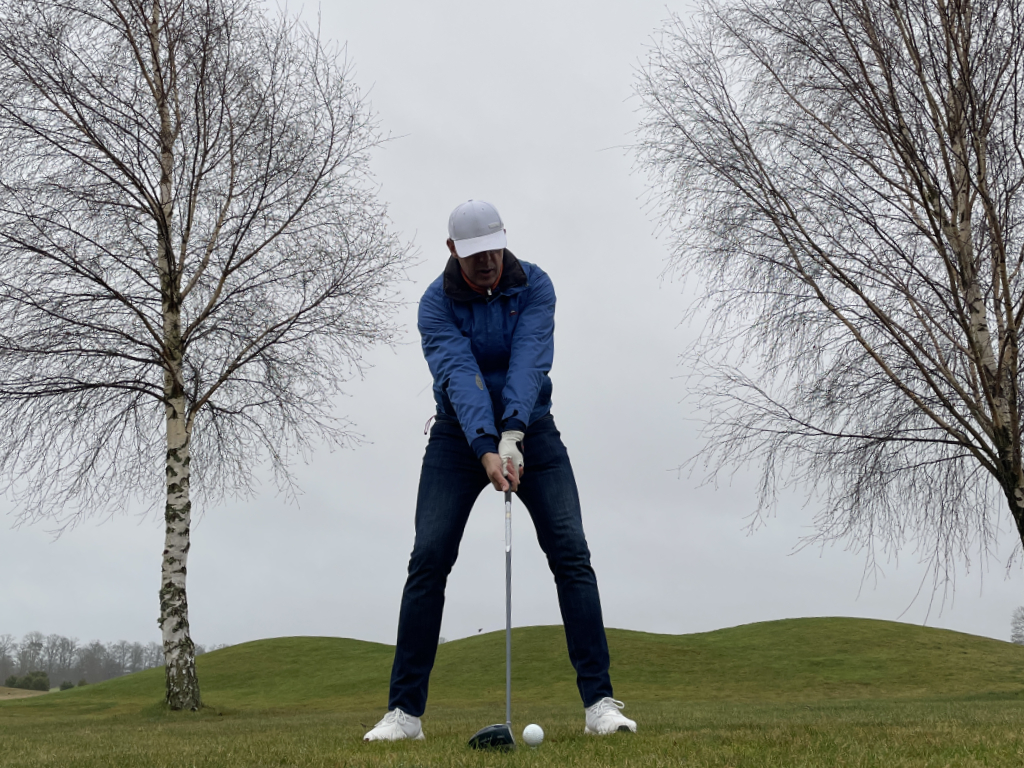
Before executing the shot:
- Take a deep breath.
- Slightly slow down your rhythm.
- Avoid rushing.
This small adjustment helps recover stability and improve coordination during the swing.
In real pressure situations, controlling the body is just as important as controlling technique.
Avoid thinking about the final result
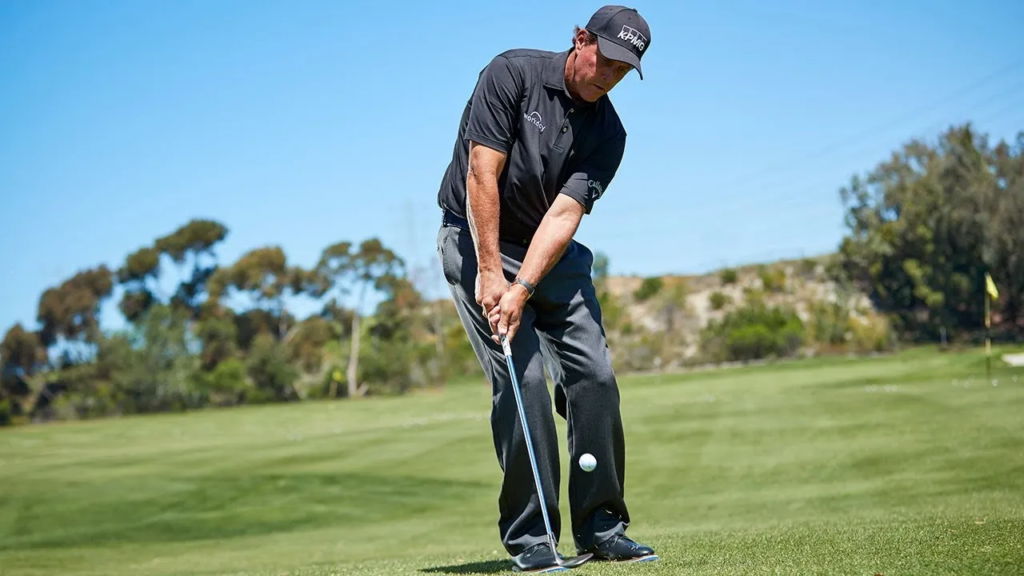
One of the main problems on the 18th hole is playing while thinking only about the score.
Common thoughts such as:
- “I need to make par.”
- “I cannot miss this shot.”
- “I have to finish the round well.”
Cause players to lose focus on simply executing the shot.
Instead, it is more effective to concentrate only on:
- The immediate target.
- The type of shot.
- The pre-shot routine.
The brain handles specific tasks better than future results.
Other common mistakes
Trying to hit harder
Many players look for security by increasing intensity. The result is usually loss of rhythm and poorer contact.
Changing the swing on the final hole
Modifying technical aspects under pressure creates more doubt and less consistency.
Thinking too much about the result
Excessive focus on the score makes it harder to stay focused on proper execution.
Rushing decisions
Anxiety leads players to play too quickly and reduces the quality of strategic decision-making.
Frequently asked questions
Does pressure really affect the swing?
Yes. Under pressure, muscle tension increases and movement fluidity decreases. This alters tempo, coordination, and contact quality. Many mistakes on the closing holes are not caused by poor technique, but by physical changes produced by stress.
The body automatically reacts to demanding situations. Learning to control that reaction greatly improves consistency.
Is it better to play more conservatively on the 18th hole?
In many cases, yes. Under pressure, low-percentage shots usually create more mistakes. The most effective approach is normally to prioritize control and strategy over unnecessary aggression.
This does not mean playing with fear, but making objective decisions. Strong finishes are usually built through mental and tactical stability.
How can I better control nerves before the shot?
Breathing and pre-shot routine are two fundamental tools. Maintaining a stable process helps reduce tension and recover a sense of control. It is also important to avoid thoughts related to the final score.
The focus should remain only on executing the next shot. Simplifying attention greatly improves reaction capacity.
Can competitive pressure be trained?
Yes. The best way is to practice in real situations where some mental demand exists. Competing, playing with specific objectives, or training on technical courses helps develop emotional adaptation.
The more frequently players manage tension, the more natural it becomes during competition. Progressive experience reduces the psychological impact of pressure.
Why do some courses increase the feeling of pressure?
Course design directly influences player perception. Factors such as wind, water, elevation changes, or open spaces increase the sense of difficulty. On technical coastal courses, decision-making requires constant precision.
This makes the closing holes even more psychologically demanding. Strategic difficulty is also part of competitive pressure.
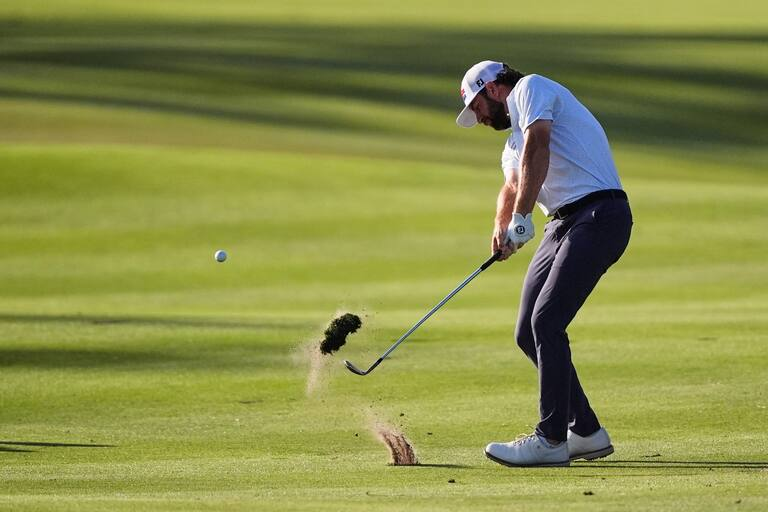
Learning how to play under pressure in golf is not about eliminating nerves, but about learning how to manage them correctly when the moment demands it. The 18th hole tests both the player’s technique and mental strength.
At Golf Alcanada, we work precisely with this type of competitive and strategic golf, where the environment, wind, and course design force players to make constant decisions under real pressure. Our course represents an ideal environment for developing control, adaptability, and competitive management.
If you want to improve your ability to compete and manage real pressure situations, training on our holes makes a significant difference both on and off the course.
Contact us if you are interested in improving your technique.
Practical guide to using the natural environment as a distance reference in golf and making better decisions on every shot
Practical guide to handling golf shots from uneven lies and avoiding common mistakes such as hooks or loss of balance
Practical checklist golf summer guide to play in Mallorca heat without losing performance or focus
Grass on golf courses in Mallorca directly affects play and adapts to the climate, influencing bounce, green speed, and strategy
Golf Alcanada offers a golf course in Mallorca with constant views of a historic lighthouse that defines every hole
Practical guide to master the wet golf bunker with adapted technique and better control after rain
